I ran the numbers. That is what I do. I am a data guy. I used to build dashboards for stock prices. Now I build them for my own body. So when my BMI hit 26.2 last March, I did what any reasonable person with a statistics degree would do. I started a spreadsheet. Two columns. BMI and waist circumference. Daily entries. 60 days. Same scale. Same tape measure. Same time of morning. Pixel, my dog, watched me do it. He was not impressed. He is a dog. He does not care about spreadsheets.
BMI is the old shortcut. It is weight divided by height squared. It was invented in the 1830s by a Belgian mathematician who was studying populations, not individuals. It does not know where your weight lives. It cannot tell muscle from fat. It is a blunt instrument. But it is easy. That is why doctors love it. That is why I hated it. That is why I tracked it anyway. Because you cannot argue with data you do not have.
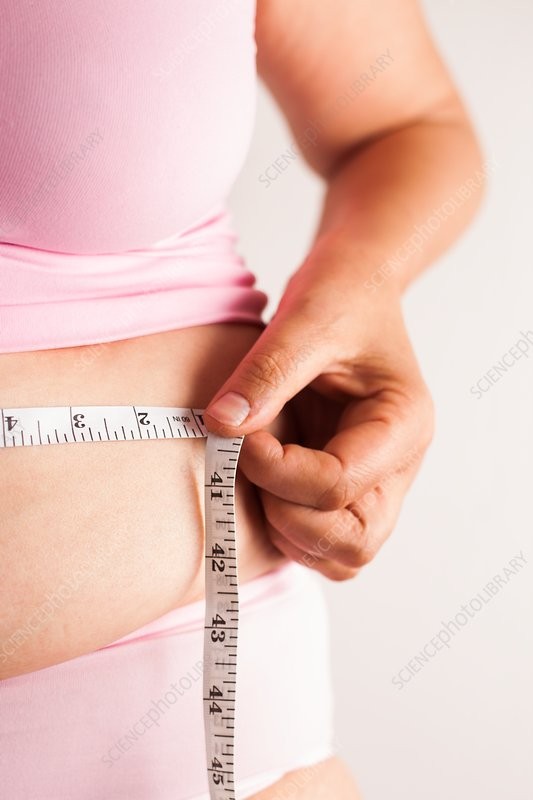
My BMI moved from 26.2 to 25.8 over 60 days. A 0.4 drop. According to the BMI chart, I went from overweight to slightly less overweight. My doctor would have called that progress. But my waist went from 37 inches to 34.5 inches. A 2.5-inch drop. That is not progress. That is a different body. My pants fit differently. My belt moved two notches. My BMI barely noticed. My BMI was asleep at the wheel.
The BMI Calculator confirmed what I already knew. At 5'10" and 180 pounds, my BMI was 25.8. Normal weight tops out at 24.9. I was still overweight by that metric. But the Waist-to-Height Ratio told a different story. My ratio went from 0.54 to 0.50. The cutoff for increased metabolic risk is 0.50. I had crossed from risk to normal. The BMI had not caught up. The BMI might never catch up. Because BMI does not care about my waist.
I used the Body Fat Estimator to triangulate. The Navy method, which uses neck and waist measurements, put me at 18.5% body fat. That is in the fitness category for men. The BMI said I was overweight. The body fat said I was fit. The waist said I was healthy. Three numbers. Three stories. Only two of them were true. The BMI was the outlier. The BMI was the bad data point. The Waist-to-Height Ratio was the simplest and the most predictive. One measurement. One ratio. No weight required. No height required. Just a tape measure and honesty. I measured at the navel, after exhaling, first thing in the morning. Consistency matters more than precision. A bad measurement taken the same way every day is better than a perfect measurement taken randomly. That is what the data says. And I trust the data.
Here is what the data says. If you are tracking health, track your waist. Not your weight. Not your BMI. Your waist. It correlates better with visceral fat, metabolic risk, and cardiovascular outcomes than BMI ever has. The NIH knows this. The WHO knows this. Your insurance company knows this. But your doctor's office still has a BMI chart on the wall because it is easier to weigh someone than to measure them. Laziness, not science.
I am not saying BMI is useless. It is useful for populations. It is useless for individuals who exercise. If you lift, if you run, if you do anything that builds muscle, your BMI is lying to you. My BMI said I was overweight. My jeans said I was lean. I trust the jeans. And the tape measure. And the spreadsheet. But mostly the jeans. Pixel agrees. He wagged his tail when the belt moved.
— James Whitfield, Austin
Pixel, my dog, does not care about my waist. He cares about walks. He cares about treats. He cares about the squirrel that lives in the tree outside our apartment in East Austin. But he has noticed that I have more energy lately. He gets longer walks. He gets more fetch. He does not know why. He does not need to know. He just benefits from the data. Dogs are the ultimate beneficiaries of human self-improvement.
I presented my 60-day data at a meetup at Gevity in Austin. A guy in the back said, but your BMI is still overweight. I said, look at the waist. He said, but the BMI. I said, the BMI is a population tool. He said, my doctor uses BMI. I said, your doctor is busy. He has 15 minutes. He needs a number. The waist-to-height ratio is a better number. It takes 10 seconds. It requires a tape measure. That is the only barrier. Ten seconds and a $3 tape measure.
I am not anti-doctor. I am anti-lazy metrics. BMI is lazy. It is easy. It is wrong for individuals. And it is especially wrong for anyone who exercises. If you are reading this and you lift weights, your BMI is lying to you. Do not let it. Measure your waist. Track it. Trust it. And if your doctor only cares about BMI, find a better doctor. Or bring your own data. Because data is power. And power is what you need when the scale says one thing and your body says another.
Here's what the BMI chart won't tell you: I gained approximately 2.5 pounds of muscle during those 60 days. I didn't measure it with a DEXA scan — too expensive, and I'm not that fancy. I estimated it using the Navy body fat method, which isn't perfect but is consistent. My body fat dropped from 19.2% to 18.1% while my weight only dropped 1.5 pounds. The math says I lost roughly 3.5 pounds of fat and gained 2 pounds of muscle.
BMI doesn't see that. BMI sees 180 pounds at 5'10" and says "overweight." It doesn't know that my deadlift went up 15 pounds. It doesn't know that I can now do 12 pull-ups instead of 8. It doesn't know that my resting heart rate dropped from 68 to 62. It just sees mass divided by height squared and renders a verdict.
This is the fundamental flaw of BMI for active individuals. It penalizes muscle. It rewards frailty. A sedentary person with 15% body fat and no muscle gets a "better" BMI than an athlete with 12% body fat and significant muscle mass. That's not science. That's arithmetic gone wrong.
I brought my 60-day data to my annual physical. My doctor — a good guy, genuinely caring — looked at my BMI of 25.8 and said "you're overweight, you should consider losing 10 pounds." I showed him my waist measurement, my body fat estimate, and my waist-to-height ratio of 0.50. He paused. He looked at the numbers. He said "huh, I guess the BMI is wrong for you."
That "huh" is the sound of a paradigm shifting. Most doctors aren't stupid. They're just busy. They have 15 minutes per patient, and BMI is the quickest metric available. When you bring them better data — waist circumference, body fat percentage, waist-to-height ratio — they usually listen. But you have to bring it. They won't measure it unless you ask.
If you want to run your own experiment, here's exactly what I did:
Measurements: Every Monday morning, before eating or drinking, after using the bathroom. Waist at navel level, tape parallel to floor, relaxed exhale. Weight on the same scale, same spot on the bathroom floor. Neck circumference for the Navy body fat formula.
Training: I didn't change my training during the 60 days. Three days per week of rucking (45 minutes, 20 lbs), two days of bouldering at Austin Bouldering Project, and daily walks with Pixel. The point was to hold training constant so that any changes in waist or body composition came from measurement accuracy, not program changes.
Diet: I tracked calories loosely — not obsessively, just awareness. Averaged about 2,400 calories per day. Protein around 140g daily. Nothing extreme. No cutting phases. No bulk cycles. Just normal eating with attention.
Consistency: The magic wasn't in the training or the diet. It was in the measurement consistency. Same time, same protocol, same tape. When you control for measurement error, the signal emerges from the noise.
Over 60 days, my weight fluctuated between 178.5 and 182.0 pounds — a 3.5-pound range driven by water, glycogen, sodium, and digestive contents. My waist fluctuated between 34.0 and 35.2 inches — a 1.2-inch range. The waist was more stable, more predictive, and more responsive to actual body composition changes.
When I ate a high-sodium meal, my weight jumped 2 pounds overnight. My waist didn't change. When I had a particularly hard bouldering session, my weight stayed flat but my waist dropped 0.3 inches the next day — probably from core engagement and temporary water redistribution.
The waist measures what matters. The scale measures everything — fat, muscle, bone, water, food, waste. If you only track one metric, track the one that correlates with health outcomes. That's not weight. That's waist.
— James Whitfield, still tracking, still measuring, still ignoring the BMI chart