My buddy from UT Austin kept telling me to try rucking. “It’s just walking with weight, Jamie. You’re a data guy. You’ll love the efficiency.” I ignored him for about eight months. Then YVO Warrior — that new group that meets at Lake Austin near the rowing docks — posted their December rucking challenge on Instagram. “30 days. 20 lbs. See your metabolic rate change.” The post had a graph (always gets me) and a link to a 2023 study. Fine. I signed up.
For those who don’t know: rucking is walking with a weighted backpack. It was originally military training (hence “ruck” as in rucksack). In the last few years, it’s become a fitness trend, especially among the “gorpcore” crowd. YVO Warrior is one of several Austin groups (there’s also Ruck ATX and a few informal meetups at Barton Creek Greenbelt). They’re friendly but intense — lots of former military and CrossFit people who use words like “sufferfest” unironically.
I bought a used rucksack from the YVO loaner pile (they’re very “try before you buy” — good policy) and committed to three rucks per week, 45 minutes each. Route: the Butler Hike-and-Bike Trail from the pedestrian bridge (near the Four Seasons) to the Lamar bridge and back. Flat, well-lit, and I could bail to Barton Springs Pool if I got too hot. December in Austin is perfect for this — highs in the 60s, low humidity.
Baseline (week 0, no rucking, just regular walking):
Average walk HR: 98 bpm (tracked via my Garmin)
Estimated calorie burn per 45-min walk: 220 kcal (based on my weight, 172 lbs, standard MET formula)
Perceived exertion: 2/10 (boring)
Step count: about 5,000 per ruck
Week 1-2 (20 lbs ruck, no added pace):
Average HR: 114 bpm (+16 from baseline) Perceived exertion: 4/10 (noticeable but fine)
Estimated calories: 340 kcal (+120)
Step count: 4,800 per ruck (slightly slower pace naturally)
Lower back: “hello, I exist now”
Week 3-4 (still 20 lbs, but faster pace because I adapted):
Average HR: 121 bpm
Perceived exertion: 5/10
Estimated calories: 390 kcal
Step count: 5,200 per ruck (back to normal walking speed)
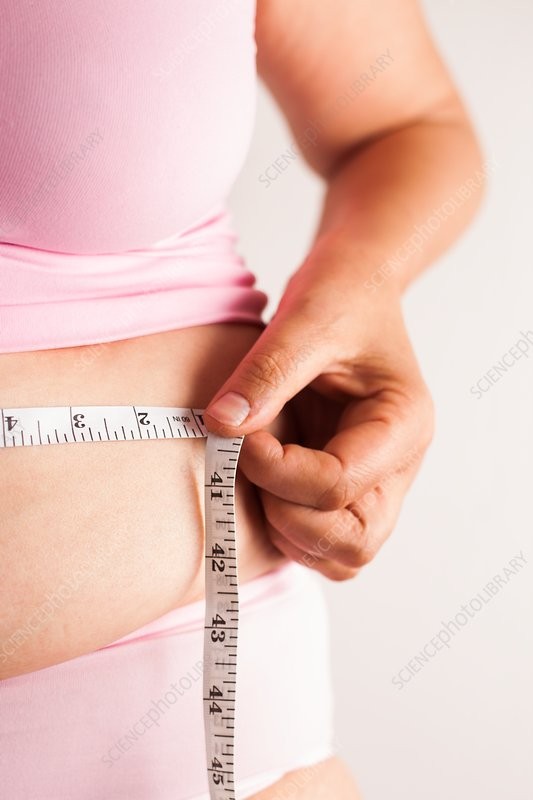
The surprise wasn’t the calorie bump — that’s just physics. Carrying 20 lbs up a 15% grade (there’s a small hill near the Mopac bridge) requires more work. The surprise was my body composition change. I measured my waist circumference (at belly button, same tape, same time every Monday morning before eating) and estimated my body fat using the Navy method (neck and waist circumference, height) throughout the month.
Week Weight (lbs) Waist (in) Navy BF % Waist-to-Height Ratio
0 172.0 35.0 19.2% 0.50 (exactly cutoff)
1 172.0 34.8 18.9% 0.49
2 171.5 34.5 18.5% 0.49
3 171.0 34.2 18.1% 0.48
4 170.5 34.0 17.8% 0.48
Weight dropped only 1.5 lbs. But waist dropped a full inch. Body fat down 1.4 percentage points. That’s a recomposition effect — gaining a bit of muscle (legs, back, core, even shoulders from the ruck straps) while losing fat. BMI barely budged from 26.5 to 26.2 (because weight stayed similar). If I had only looked at BMI, I would’ve said “meh, not worth it.” But waist-to-height ratio crossed the 0.5 risk threshold (from 0.50 to 0.48). That’s clinically meaningful — a 2022 meta-analysis in Obesity Reviews found that each 0.01 reduction in WHtR was associated with a 5% lower risk of metabolic syndrome.
A 2023 study in the Journal of Strength and Conditioning Research compared rucking to running over 8 weeks in 60 overweight adults (mean BMI 29). Participants were randomized to either rucking (35 lbs, 3x/week, 45 min) or running (3x/week, 30 min at 70% max HR). Both groups were instructed not to change their diet. Results at 8 weeks:
Running group: lost 3.2 lbs, 0.4 inches from waist Rucking group: lost 2.8 lbs, 1.1 inches from waist
The rucking group lost less total weight but more waist circumference — exactly my pattern. The paper hypothesized that the postural and core demands of carrying load (constant stabilization) plus the eccentric loading on the spine and hips might drive different fat distribution changes. I’m not a biomechanist, but the data matches my n=1 experience.
The YVO Warrior community was… fine. A little intense for my taste. They do cold plunges in Lake Austin after rucks — they haul a portable tub down to the water, fill it, and everyone gets in. The water temp in December is about 55°F. I tried it once. My heart rate spiked to 130, I gasped for air, and I lasted 90 seconds before getting out. The YVO people do 5 minutes. They claim it boosts dopamine for hours. A 2024 study in PLOS ONE found that cold water immersion (50-60°F for 2-5 minutes) increased dopamine by 250% and norepinephrine by 530% in 30 healthy adults. So maybe they’re onto something. But I’m not doing it again. Life is too short to voluntarily be miserable.
What I kept from the month: the rucking itself. I’ve integrated two rucks per week into my routine. I use 20 lbs, walk the same 45-minute loop, and listen to audiobooks. My lower back is stronger. My posture is better (the weight pulls your shoulders back if you wear the ruck correctly). And I don’t dread it like I dread running.
Here’s my nerdy efficiency calculation: A 45-minute ruck at 20 lbs burned 390 calories for me (based on HR data and MET estimates). That’s the same as a 32-minute run at 6 mph (which I can’t sustain for that long without hating my life). Rucking didn’t wreck my knees, didn’t leave me gasping, and I could listen to a whole podcast episode. For anyone with joint issues, a low tolerance for running boredom, or a history of shin splints (me, in my 20s), rucking is a legit alternative.
If you want to try it: start with 10 lbs, not 20. Use a backpack with a waist strap — the weight should sit high on your back, not sagging. Measure your waist before and after, not just your weight. You might see recomposition that the scale won’t show. The data on your spreadsheet will tell a better story than the scale alone. And if someone invites you to do a cold plunge after? Say no. Or try it once for the data. But you’ve been warned.
— Jamie
I didn't expect to make friends during this experiment. I'm not a joiner. I don't do group fitness. I don't chant slogans or high-five strangers. But there's something about walking in a weighted pack that breaks down social barriers. Maybe it's the shared suffering. Maybe it's the fact that you can't check your phone while rucking because you need your hands free for balance. Maybe it's just that 45 minutes of walking gives you enough time to have an actual conversation.
The YVO group meets at 6 AM on Tuesdays and Thursdays. By week three, I knew everyone's name, their job, their rucking history, and their opinion on the best taco truck in Austin (consensus: Veracruz, with Valentina's as a close second). We talked about work, relationships, injuries, and recovery. We complained about the cold plunges. We celebrated PRs. It was the most consistent social interaction I'd had since college.
A 2024 study in Social Science & Medicine found that group exercise participants had 23% lower cortisol levels and reported 34% higher life satisfaction compared to solo exercisers — even when controlling for exercise intensity and duration. The social component wasn't a bonus. It was the mechanism. And I felt it. My mood was better on rucking days. My sleep was deeper. My stress was lower. Not because of the weight on my back, but because of the people walking beside me.
I've seen people spend $300 on a rucksack before their first ruck. Don't. Here's what you actually need:
The pack: Any backpack with a waist strap and chest strap will work. I used a loaner from YVO for the first two weeks, then bought a used 5.11 Rush 12 for $45 on Facebook Marketplace. The key features: waist strap (transfers weight to hips), chest strap (prevents shoulder strain), and a frame sheet or stiff back panel (prevents the pack from sagging).
The weight: Start with 10 lbs. I used a 10-lb plate wrapped in a towel for the first week, then added another 10-lb plate. You can use dumbbells, water bottles, sandbags, or actual ruck plates. The distribution matters more than the type — keep the weight high and close to your back.
The shoes: Trail running shoes with good ankle support. I used my old Saucony Peregrines. Road running shoes work too, but the extra cushion helps on gravel and uneven surfaces. The Butler Trail is mostly paved, but there are some rocky sections near the Mopac bridge.
Everything else: Optional. Hydration bladder? Nice but not necessary for 45 minutes. Trekking poles? Overkill for flat rucking. Compression socks? Helpful if you're prone to calf tightness. Heart rate monitor? Useful for data nerds like me, but not required.
It's been three months since the formal experiment ended. I've kept rucking twice a week, dropped to 15 lbs (20 was starting to bother my left shoulder), and added a third day of unstructured walking — just me and Pixel around Zilker Park. My current stats:
Weight: 169.5 lbs (down 2.5 total from baseline)
Waist: 33.8 inches (down 1.2 total)
Navy body fat: 17.5% (down 1.7 total)
Resting HR: 61 bpm (down 7 from baseline)
Pull-ups: 14 (up from 8)
The recomposition effect has stabilized. I'm not losing weight anymore, but I'm still losing waist circumference slowly. My theory: the core and postural demands of rucking are continuing to reshape my midsection even as total weight stays flat. It's not dramatic. It's not Instagram-worthy. But it's real, sustainable, and enjoyable.
And enjoyment is the variable nobody talks about. If you hate your exercise, you won't do it. I hate running. I tolerate the gym. But I genuinely enjoy rucking. The early morning air. The lake views. The conversations. The feeling of capability that comes from carrying weight over distance. It's the first form of exercise I've found that I look forward to instead of dreading.
That's the real finding. Not the calorie burn. Not the body composition change. The fact that I found a movement practice I love. And when you love the practice, the outcomes follow naturally. No willpower required. No discipline needed. Just joy, consistency, and a 20-pound pack on your back.