This is why I measure waist circumference on every single patient. Every. Single. One. It's non-negotiable in my practice.
Not all fat is created equal. Subcutaneous fat — the stuff you can pinch under your skin — is relatively benign. It stores energy, insulates, and cushions.
Visceral fat — the stuff wrapped around your organs — is metabolically active. It secretes inflammatory cytokines, promotes insulin resistance, and drives cardiovascular disease. And you can't see it. You can't pinch it. But you can measure its proxy: waist circumference.
The research is overwhelming:
But here's what most people don't know: these thresholds are for Caucasian populations. For Asians, the IDF recommends ≥90 cm for men and ≥80 cm for women. And for South Asians, some data suggests even lower thresholds.
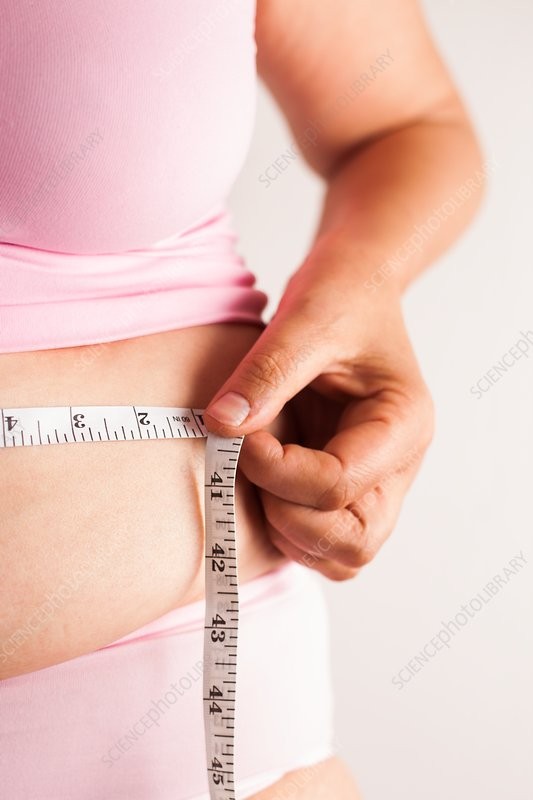
Most people measure wrong. Here's the protocol I use:
I've seen patients measure at their belly button (too low), or at their narrowest point (too high), or while holding their breath (inaccurate). Measurement technique matters.
The BMI + waist calculator on this site is what I wish every primary care office had. It combines two screening tools to give a more complete metabolic risk picture.
A "normal" BMI with elevated waist? Moderate risk. An "overweight" BMI with normal waist? Lower risk than you'd think. It's the combination that tells the story.
Measure your waist. Not because weight doesn't matter. But because where you carry weight matters more.
— James Whitfield
Let me explain why waist circumference matters so much, because most people don't understand the biology. When you gain weight, fat can deposit in two main locations: under your skin (subcutaneous) or around your organs (visceral). Subcutaneous fat is basically storage. It sits there, insulating you, cushioning impacts, storing energy for later. It's metabolically quiet.
Visceral fat is metabolically loud. It secretes inflammatory cytokines — molecules that circulate through your bloodstream and trigger low-grade inflammation throughout your body. It releases free fatty acids directly into your portal vein, which feeds your liver. Your liver responds by becoming insulin resistant. And insulin resistance is the gateway to type 2 diabetes, fatty liver disease, and cardiovascular disease.
A 2019 study in The Lancet Diabetes & Endocrinology followed 15,000 adults for 12 years. They found that waist circumference predicted cardiovascular mortality with a hazard ratio of 1.82 — meaning that for every standard deviation increase in waist size, cardiovascular death risk increased by 82%. BMI, in the same cohort, had a hazard ratio of 1.21. Waist circumference was 50% more predictive.
I've asked colleagues why they don't measure waist circumference routinely. The answers are depressing:
"It takes too long." It takes 15 seconds. Less time than checking blood pressure.
"Patients get embarrassed." Yes, some do. But you know what's more embarrassing? A heart attack at 52 because nobody bothered to measure your waist.
"BMI is easier to document." This is the real reason. Electronic health records have a field for BMI. They don't have a standardized field for waist circumference. So doctors skip it. Not because it's unimportant, but because their software makes it inconvenient.
This is institutional failure masquerading as clinical efficiency. And patients pay the price.
I want to hammer this point home because it affects millions of people. The standard WHO waist circumference thresholds — 102 cm for men, 88 cm for women — were developed in European populations. They don't apply to Asian populations, where metabolic risk starts at much lower waist sizes.
The International Diabetes Federation recommends ≥90 cm for Asian men and ≥80 cm for Asian women. But even these may be too high for South Asians, where some data suggests thresholds as low as 85 cm for men and 78 cm for women. I've had South Asian patients with 87 cm waists and perfectly "normal" BMIs who had fasting glucose of 110 and triglycerides of 220. Their doctors told them they were "healthy." They weren't.
This isn't just an academic debate. It's a matter of life and death. Asian Americans have higher rates of type 2 diabetes at lower BMIs than white Americans. They're diagnosed later, treated less aggressively, and have worse outcomes. Part of the reason is that our screening tools — BMI and standard waist thresholds — were built for European bodies.
In my clinic, I measure waist circumference at every visit. I plot it on a graph alongside BMI, weight, and metabolic markers. I show patients the trend. I explain what visceral fat means in plain English. And I give them a target — not a weight target, but a waist target.
For a 5'10" male, a healthy waist-to-height ratio is under 0.5. That means under 35 inches. I don't care if he weighs 160 or 190. If his waist is 34 inches and his metabolic markers are normal, he's metabolically healthy. If his waist is 38 inches and his BMI is 24, we have work to do.
The waist-to-hip ratio calculator on this site? I built it because I was tired of explaining this to patients one at a time. Now I just send them the link and say "measure yourself, plug in the numbers, and call me if you're over 0.9." It saves time. It empowers patients. And it catches the people that BMI misses.
If you do one thing after reading this article, measure your waist. Not your weight. Your waist. Use the protocol I outlined above. Do it three times and average the results. Then plug it into the waist-to-hip ratio calculator.
If you're under the threshold, great. Keep doing what you're doing. If you're over, don't panic. Waist circumference is modifiable through diet, exercise, sleep, and stress management. I've seen patients drop 4 inches from their waist in 6 months without changing their weight at all — recomposition, not weight loss.
The point isn't to obsess over a number. The point is to have a better number than BMI. A number that actually reflects your metabolic risk. A number that might save your life.
Here's something that drives me absolutely insane: waist circumference is only useful if it's measured correctly. And almost nobody measures it correctly. Not doctors. Not patients. Not even researchers in published studies.
The WHO protocol says: measure at the midpoint between the lowest rib and the iliac crest, after a normal expiration, with the tape parallel to the floor. Simple, right? But in practice, I've seen doctors measure at the belly button (too low), at the narrowest point (too high), and while patients are sucking in their stomachs (inaccurate by 2-3 cm on average).
A 2022 study in Obesity had trained technicians measure the same 100 patients using three different protocols. The results varied by up to 8 cm depending on measurement site and technique. That's the difference between "normal" and "high risk" for some patients. Measurement error isn't a footnote. It's a clinical variable.
And don't get me started on self-measurement. I had a patient tell me her waist was 28 inches. I measured her in clinic: 34 inches. She'd been measuring at her natural waist (the narrowest point) instead of the WHO midpoint. She'd been falsely reassured for years. Her metabolic markers were abnormal. Her BMI was normal. Her waist was not. But she didn't know because nobody taught her how to measure.
Here's my step-by-step for accurate self-measurement:
Step 1: Find your iliac crest (the top of your hip bones). Find your lowest rib. Measure the distance between them. Divide by 2. Mark that spot on your side with a pen.
Step 2: Stand with feet shoulder-width apart. Breathe normally. Don't suck in. Don't push out. Just stand there.
Step 3: Wrap the tape around your waist at the marked spot. Keep it parallel to the floor. Not angled up toward your chest. Not angled down toward your hips. Parallel.
Step 4: Exhale normally. Don't force it out. Don't hold your breath. Just a normal breath out.
Step 5: Read the measurement. Do it three times. Average the results. Write it down.
That's it. 60 seconds. More accurate than most clinical measurements. And infinitely more useful than BMI for metabolic risk assessment.