24.2%. That was the weight loss in Eli Lilly's Phase 2 trial for retatrutide — the triple hormone receptor agonist targeting GLP-1, GIP, and glucagon. In a 48-week study, participants lost an average of 24.2% of their body weight. The top quartile lost over 30%. Some participants lost over 35%. This is not incremental improvement. This is a different category of pharmacological intervention. And it raises a question that sounds like science fiction but is becoming clinically relevant: if a drug can make a person lose a third of their body weight, what happens to BMI? Does BMI become obsolete? Or does it become dangerous?
I have been tracking retatrutide since the Phase 2 data dropped in 2023. I built a spreadsheet then. I have updated it monthly for three years. The TRIUMPH program — Phase 3 trials for obesity, diabetes, and cardiovascular outcomes — is reading out through 2026. NDA filing is expected late 2026 or early 2027. Approval projected for 2027-2028. And when it hits the market, retatrutide will be the most effective weight-loss drug in human history. Not by a small margin. By a chasm.
Here is what the data says. The Phase 2 trial enrolled 338 participants without diabetes. Mean baseline weight was 225 pounds. Mean baseline BMI was 37.8. After 48 weeks on the highest dose, mean weight loss was 24.2%. That is 54 pounds. The BMI dropped from 37.8 to 28.7. The average participant moved from Class II obesity to overweight. Not borderline. Not barely. A full category shift. And the Phase 3 data is expected to be even stronger, with longer follow-up and larger sample sizes.
Calculate your BMI instantly with visual category charts and history storage.
All data stays in your browser — we never see it.I modeled the population-level impact. In the United States, approximately 42% of adults have obesity — BMI 30 or higher. That is roughly 108 million people. If retatrutide achieves 24% weight loss in real-world use, and if 10% of the obese population takes it, that is 10.8 million people moving from obese to overweight or normal BMI. The public health impact is staggering. The economic impact is staggering. The BMI distribution of the entire country would shift.
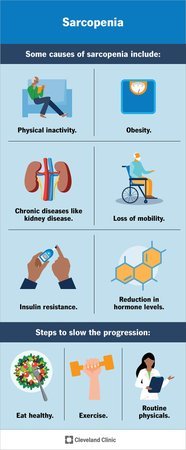
But here is the problem. BMI does not measure health. It measures weight relative to height. And when a drug causes 24% weight loss, a significant portion of that loss is lean mass — muscle, bone, connective tissue. The Phase 2 data showed appendicular lean mass reduction of approximately 12-14%. Some of this is fat-free mass associated with adipose tissue, but some is genuine muscle loss. A patient who loses 50 pounds of fat and 10 pounds of muscle gets the same BMI reduction as a patient who loses 60 pounds of fat and gains 5 pounds of muscle. But their metabolic health is radically different. The first patient is thinner but potentially sicker. The second patient is thinner and healthier. BMI cannot tell them apart.
This is not a theoretical concern. In the CagriSema REDEFINE trials, lean mass loss was significant enough that some researchers called for mandatory resistance training protocols. Retatrutide is more potent than CagriSema. The lean mass loss may be proportionally greater. If we use BMI as our primary endpoint for retatrutide success, we will celebrate patients who are losing muscle mass. We will call them "successes" when their metabolic health may be deteriorating. And we will deny continued coverage to patients who need the drug most, because their BMI has dropped below the threshold.
Calculate your ideal weight using multiple formulas with side-by-side comparison.
All data stays in your browser — we never see it.I brought this up at a health data meetup at YVO Warrior on the Butler Trail. A trainer named Marcus — not the Medicare Marcus from my earlier article, a different Marcus, 52, former college wrestler — said something that stopped the conversation. "I have clients on semaglutide who lost 40 pounds and cannot do a push-up. Their BMI is 'normal.' Their body composition is a disaster. Retatrutide is going to make this ten times worse if we do not measure muscle." He was right. And he was angry. He had been trying to convince physicians to prescribe resistance training alongside GLP-1s for two years. Most of them nodded politely and wrote another prescription.
The pharmaceutical industry is not helping. Eli Lilly's marketing for retatrutide will emphasize the 24% number. It will show before-and-after photos. It will talk about "transformation." It will not talk about muscle loss. Not because they are hiding it — the data is published — but because muscle loss is a complicated story that does not fit in a 30-second commercial. The FDA will require labeling. Physicians will read it. Patients will not. And patients will look at their BMI — now "normal" — and think the job is done.
I built a model to illustrate the danger. Patient A: baseline BMI 38, weight 240 lbs, body fat 42%, lean mass 139 lbs. After 24% weight loss: weight 182 lbs, body fat 32%, lean mass 124 lbs. BMI 28.9. "Overweight." But body fat percentage dropped 10 points. Muscle loss was 11%. Metabolic health: significantly improved. Patient B: baseline BMI 38, weight 240 lbs, body fat 42%, lean mass 139 lbs. After 24% weight loss with poor protein intake and no exercise: weight 182 lbs, body fat 38%, lean mass 113 lbs. BMI 28.9. Same BMI. But body fat only dropped 4 points. Muscle loss was 19%. Metabolic health: potentially worse than baseline because of sarcopenia and insulin resistance from muscle loss.
Estimate body fat percentage using the US Navy tape method and BMI-based formulas.
All data stays in your browser — we never see it.BMI cannot distinguish Patient A from Patient B. Neither can the scale. Only body composition testing can. And body composition testing — DEXA, bioimpedance, even the Navy tape method — is not standard of care in obesity pharmacotherapy. It is not reimbursed by most insurance plans. It is not required by the FDA. It is an afterthought in a field where the primary endpoint is weight loss, and weight loss is measured by BMI.
The Medicare GLP-1 Bridge program makes this even more dangerous. Patients qualify based on BMI. They take retatrutide. Their BMI drops. They no longer qualify for continued coverage. But if they lost disproportionate lean mass, they may need the drug more than ever — or they may need a completely different intervention. The policy is designed around a metric that becomes less meaningful as the drugs become more effective. It is like using a ruler to measure temperature. The tool is wrong for the job.
I spoke with a clinical researcher at UT Austin who is working on composite endpoints for obesity trials. She told me — over coffee at Houndstooth, where my heart rate was predictably elevated — that the field is moving toward "metabolic health score" models that combine BMI, waist circumference, body fat percentage, blood pressure, glucose, and lipids. But these models are 5-10 years from clinical adoption. In the meantime, we are using BMI to approve and deny access to drugs that make BMI obsolete.
So here is my prediction. By 2030, BMI will still be used in clinics. It will still be on insurance forms. It will still be the number patients know. But it will be increasingly irrelevant for patients on next-generation obesity drugs. The real metrics will be body composition, metabolic panels, functional fitness, and quality of life. BMI will be a legacy field on a form, like fax number on a business card. Present but pointless.
Retatrutide is the drug that breaks BMI. Not because it is bad, but because it is too good. When a medication can reshape a body by 24%, the old categories — normal, overweight, obese — lose their meaning. The question is no longer "what is your BMI?" The question is "what is your body composition, your metabolic health, your functional capacity, your quality of life?" And those questions require better tools than a 200-year-old formula.
I will keep the spreadsheet open. I will keep tracking the TRIUMPH trial readouts. I will keep arguing for body composition monitoring in obesity care. Because the future is not about getting smaller. It is about getting healthier. And health is not a single number. It is a dashboard. And dashboards need more than one widget. They need muscle mass, metabolic markers, functional capacity, and quality of life. They need the whole story. Not just the headline. And 24.2% is one hell of a headline.