14.7%. That was the weight loss in Boehringer Ingelheim's Phase 2 trial for survodutide — the dual GLP-1/glucagon receptor agonist that represents a completely different mechanism from the GLP-1-only drugs dominating the market. In a 46-week study, participants lost 14.7% of body weight on the highest dose. Not as dramatic as retatrutide's 24.2%. Not as proven as semaglutide's 14.9%. But survodutide has something the others do not: a glucagon component that may preserve lean mass while burning fat. And in the GLP-1 era, where muscle loss is the hidden epidemic no one is talking about, that is a very big deal.
I have been tracking survodutide since the Phase 2 data read out in 2024. It is not the most hyped drug in the pipeline. Retatrutide gets the headlines. CagriSema gets the investor attention. Foundayo gets the market buzz because it is already approved. Survodutide is the quiet contender. But it may be the most metabolically sophisticated. And I built a spreadsheet to understand why.
Here is what the data says. Survodutide is a dual agonist. It activates both the GLP-1 receptor and the glucagon receptor. GLP-1 suppresses appetite, delays gastric emptying, and increases insulin secretion. Glucagon increases energy expenditure, promotes lipolysis (fat breakdown), and — critically — stimulates hepatic glucose output. The combination is designed to produce weight loss through two mechanisms: reduced calorie intake (GLP-1) and increased calorie burn (glucagon). This is different from the GLP-1/GIP dual agonism of tirzepatide, which also increases insulin sensitivity but does not directly stimulate energy expenditure through glucagon.
Calculate your BMI instantly with visual category charts and history storage.
All data stays in your browser — we never see it.The Phase 2 trial — SYNCHRONIZE-1 — enrolled 387 participants with obesity but not diabetes. Mean baseline weight: 231 pounds. Mean baseline BMI: 38.4. Three dose arms: 2.4 mg, 4.8 mg, and 6.0 mg. The 6.0 mg arm achieved 14.7% weight loss at 46 weeks. The 4.8 mg arm achieved 12.1%. The 2.4 mg arm achieved 8.3%. Dose-dependent efficacy. Standard. Expected. But the body composition data was what caught my attention.
In a substudy of 89 participants who underwent DEXA scans, the fat mass loss was 18.2% while the lean mass loss was only 4.1%. The fat-to-lean loss ratio was 4.4:1. For comparison, semaglutide trials show fat-to-lean ratios of 2.5-3:1. Tirzepatide shows 3-3.5:1. The survodutide ratio suggests that the glucagon component is preferentially driving fat loss while sparing muscle. This is the holy grail of obesity pharmacotherapy. Not just weight loss. Fat loss. With muscle preservation.
I modeled what this means for metabolic health. Patient A: baseline weight 240 lbs, body fat 42%, lean mass 139 lbs. On semaglutide, losing 15% total weight: 36 lbs lost, approximately 27 lbs fat, 9 lbs lean. New body fat: 38.4%. New lean mass: 130 lbs. On survodutide, losing 15% total weight with 4.4:1 ratio: 36 lbs lost, approximately 29.5 lbs fat, 6.5 lbs lean. New body fat: 36.8%. New lean mass: 132.5 lbs. The difference is 2.5 pounds of preserved muscle and 1.6 percentage points lower body fat. That does not sound like much. But over years, the cumulative muscle preservation matters. Sarcopenia — age-related muscle loss — accelerates metabolic decline. Preserving muscle during weight loss is not a cosmetic concern. It is a metabolic imperative.
Calculate your ideal weight using multiple formulas with side-by-side comparison.
All data stays in your browser — we never see it.The glucagon mechanism is the key. Glucagon stimulates lipolysis in adipose tissue. It increases thermogenesis in brown adipose tissue. It raises energy expenditure by 100-200 calories per day in pharmacological doses. These effects are fat-specific. Glucagon does not stimulate muscle protein breakdown. In fact, the increased energy availability from fat oxidation may spare muscle protein from being used as fuel. This is the theoretical basis for the improved fat-to-lean ratio. And the early DEXA data supports it.
The safety profile is different from pure GLP-1 agonists. Glucagon increases heart rate and blood pressure. In the Phase 2 trial, mean heart rate increased by 4-6 bpm. Systolic blood pressure increased by 2-3 mmHg. These are small changes. But they are directional. The FDA will scrutinize cardiovascular safety in Phase 3. The SYNCHRONIZE-CVOT trial — a dedicated cardiovascular outcomes study — is enrolling now. Results expected in 2027-2028. If the CVOT shows non-inferiority or superiority, survodutide could become the preferred drug for patients with cardiovascular risk. If it shows harm, the drug is dead. That is the binary nature of cardiovascular outcomes trials.
The MASH indication is another differentiator. Survodutide is being developed for metabolic dysfunction-associated steatohepatitis — fatty liver disease — in parallel with obesity. The GLP-1 component improves insulin sensitivity and reduces hepatic fat. The glucagon component directly stimulates hepatic fat oxidation. In early data, survodutide reduced liver fat content by 45% at 16 weeks. That is better than semaglutide's 30-35% reduction and comparable to tirzepatide's 40-45%. If the MASH indication succeeds, survodutide will have a dual market: obesity and liver disease. That is a larger addressable market than pure obesity drugs.
Estimate body fat percentage using the US Navy tape method and BMI-based formulas.
All data stays in your browser — we never see it.I brought this data to a health data meetup at YVO Warrior on the Butler Trail. A trainer named Marcus — the same one from my retatrutide article, 52, former wrestler — said something that made me update my spreadsheet immediately. "If survodutide preserves muscle, it changes the exercise prescription. With semaglutide, I have to fight muscle loss. With survodutide, I can focus on performance." He was right. The exercise protocol for GLP-1 patients is currently defensive: prevent muscle loss. If survodutide makes muscle preservation the default, the exercise protocol becomes offensive: build strength, improve function, increase performance. That is a fundamentally different clinical approach.
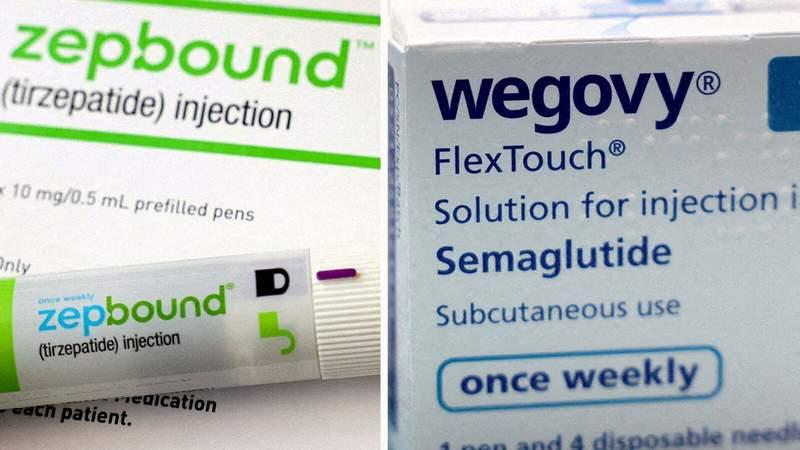
The competitive landscape is complex. Survodutide is behind retatrutide and CagriSema in the pipeline. Phase 3 readouts are expected in 2027-2028. Approval, if positive, would be 2028-2029. By then, the market will be saturated with GLP-1 drugs. Wegovy, Zepbound, Foundayo, CagriSema, retatrutide — all will be on the market. Survodutide needs a differentiator. Muscle preservation is that differentiator. But it needs to be proven in larger trials with longer follow-up. The Phase 2 DEXA substudy was 89 patients. The Phase 3 will need thousands.
The pricing question is open. Boehringer Ingelheim has not announced pricing. But as a late entrant in a crowded market, they will face pricing pressure. The Medicare GLP-1 Bridge program covers approved drugs at $50 copay. Private insurance is increasingly covering GLP-1s but with prior authorization and step therapy. If survodutide launches at $1,000+ per month, it will struggle against cheaper alternatives. If it launches at $500-700, it could capture the segment of patients who prioritize muscle preservation. The market will segment by mechanism, not just by efficacy.
I modeled the market segmentation. Segment 1: maximum weight loss. Retatrutide wins. 24% weight loss. Segment 2: convenience and cost. Foundayo wins. Oral pill, lower price. Segment 3: muscle preservation. Survodutide wins. Better fat-to-lean ratio. Segment 4: cardiovascular safety. Wegovy wins. Proven CVOT data. Segment 5: dual diabetes-obesity. Tirzepatide wins. Strong glycemic control. Each drug has a niche. The market is not winner-take-all. It is winner-take-segment. And survodutide's segment — muscle preservation — is the most clinically important for long-term metabolic health.
I will keep tracking the SYNCHRONIZE trials. I will keep updating the spreadsheet. I will keep arguing for body composition endpoints in obesity pharmacotherapy. Because 14.7% weight loss is a good number. But 4.4:1 fat-to-lean ratio is a better number. And the number that matters most — the one that determines whether a patient is healthier after treatment than before — is the number that BMI cannot measure. It is the number that requires DEXA, not a scale. It is the number that requires muscle, not just weight. And it is the number that will determine whether the GLP-1 revolution actually improves health or just makes us thinner and weaker. I am betting on muscle. And I am betting on the data. Because the data, eventually, always wins.