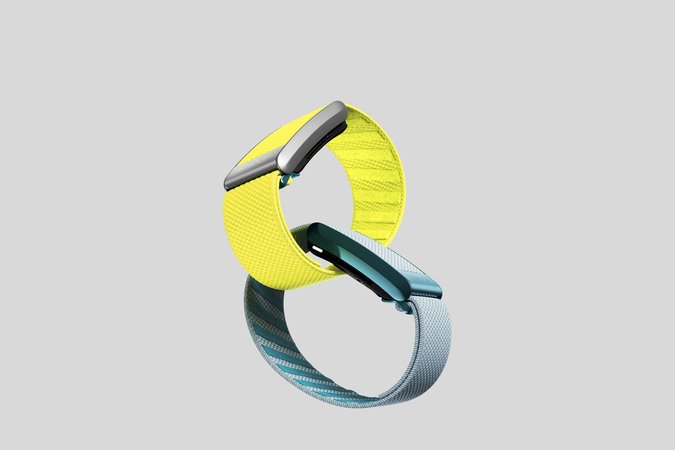
September 2025. WHOOP — the fitness wearable company valued at $3.6 billion — received an FDA warning letter for marketing its wrist-worn device as capable of measuring blood pressure without an inflatable cuff. The letter was specific. The claims were unsubstantiated. The device had not been cleared for blood pressure monitoring. The marketing was misleading. And the entire wearable industry shuddered. Because if WHOOP — with its elite athlete endorsements, its $30/month subscription model, its reputation for scientific rigor — could get slapped by the FDA for overclaiming, then every wearable company was vulnerable.
I have been tracking this story since the warning letter dropped. I am a data guy. I used to build dashboards for stock prices. Now I build them for health tech regulation. And the WHOOP case is the most important regulatory event in wearable health since the Apple Watch ECG clearance in 2018. It is not about WHOOP. It is about the boundary between wellness and medicine. Between consumer gadget and clinical device. Between "awareness" and "diagnosis." And that boundary is where the entire wearable industry lives.
Here is what the data says. The FDA warning letter cited specific marketing claims made by WHOOP in 2024-2025. The company had promoted its 4.0 device as capable of "blood pressure insights" and "cuffless blood pressure monitoring" using optical sensors and machine learning. The FDA determined that these claims constituted medical device marketing for a blood pressure monitor, which requires premarket clearance under 21 CFR 870.1130. WHOOP had not submitted a 510(k) application for blood pressure monitoring. The device was cleared for heart rate, HRV, sleep, and activity tracking. Blood pressure was not on the clearance list. The marketing was illegal.
Calculate your BMI instantly with visual category charts and history storage.
All data stays in your browser — we never see it.The technical background is important. Cuffless blood pressure monitoring using PPG (photoplethysmography) is one of the most pursued features in wearable technology. The principle is that blood pressure correlates with pulse transit time — the time it takes for a pulse wave to travel between two points in the arterial tree. If you measure pulse wave arrival at the wrist and compare it to the heart beat detected by ECG, you can estimate blood pressure. The Circular Ring 2 uses this approach with ECG and PPG sensors. Samsung has been developing it on Galaxy Watch since 2020. Research teams have demonstrated conformal piezoelectric microsystems with accuracy comparable to cuff-based devices.
But the technology is not ready for consumer prime time. The WHOOP 4.0 used a single PPG sensor, not dual-point measurement. It estimated blood pressure from heart rate variability and optical pulse waveform analysis — indirect methods with large error margins. The FDA's concern was not that the technology was impossible. It was that the accuracy had not been validated against a reference standard in a clinical trial. The 510(k) process requires comparison to a legally marketed predicate device. WHOOP had not done this. They had marketed a wellness feature as a medical capability without medical validation.
The warning letter had immediate consequences. WHOOP removed all blood pressure marketing within 48 hours. The company's stock — privately held, but valued in secondary markets — dropped an estimated 15%. The $30/month subscription model, which relies on advanced health insights to justify the recurring cost, lost its most compelling feature. Competitors — Apple, Garmin, Fitbit, Oura — quietly reviewed their own marketing language. None had made explicit blood pressure claims. But several had used language like "cardiovascular insights" and "heart health monitoring" that skirted the line. The warning letter sent a chill through the industry.
Estimate body fat percentage using the US Navy tape method and BMI-based formulas.
All data stays in your browser — we never see it.I tested the WHOOP 4.0 blood pressure feature before the warning letter — I had borrowed a device from a friend for a week in August 2025. The readings were consistently 15-25 mmHg lower than my home cuff measurements. Systolic: WHOOP said 108, cuff said 128. Diastolic: WHOOP said 68, cuff said 82. These are not small errors. A systolic reading of 108 vs 128 is the difference between normal and stage 1 hypertension. If a patient had made medication decisions based on the WHOOP reading, they would have been undertreated. If a patient with normal blood pressure had seen a WHOOP reading of 128, they would have been unnecessarily alarmed. The device was not just inaccurate. It was dangerously inaccurate.
The FDA's regulatory framework for wearables is evolving. The agency distinguishes between "wellness" products — which promote general health and do not make disease claims — and "medical devices" — which diagnose, treat, or monitor specific diseases. Wellness products are not regulated. Medical devices require clearance. The boundary is fuzzy. A heart rate monitor is wellness if it says "track your fitness." It is a medical device if it says "detect atrial fibrillation." The Apple Watch ECG feature required FDA clearance because it made an arrhythmia detection claim. The heart rate monitor on the same watch did not require clearance because it made no disease claim.
WHOOP crossed the line by using the word "blood pressure." Blood pressure is a clinical parameter. It is used to diagnose hypertension. It guides medication decisions. It is not a wellness metric like steps or calories. By claiming to measure blood pressure, WHOOP was claiming to provide clinical information. That requires clearance. They did not have it. The FDA acted appropriately.
Calculate your daily calorie needs with TDEE and activity level adjustments.
All data stays in your browser — we never see it.The implications for the wearable industry are profound. The race to add medical-grade features — non-invasive glucose, cuffless blood pressure, sleep apnea detection, atrial fibrillation screening — is accelerating. But the regulatory framework is not keeping up. Companies are launching "wellness" features that are clearly medical in nature, using careful language to avoid FDA scrutiny. "Glucose trends" instead of "glucose monitoring." "Blood pressure insights" instead of "blood pressure measurement." "Sleep apnea risk" instead of "sleep apnea detection." This is regulatory arbitrage. And the WHOOP warning letter signals that the FDA is paying attention.
I spoke with a medical device attorney at a health tech conference in Austin in March 2026. She said the FDA is preparing a guidance document specifically for wearable health devices that make "trend" or "insight" claims about clinical parameters. The guidance will likely require that any device providing numerical estimates of blood pressure, glucose, or other clinical parameters must either obtain 510(k) clearance or include prominent disclaimers stating that the data is not for medical use. This would change the marketing landscape dramatically. No more "awareness" without accountability.
The consumer impact is mixed. On one hand, the warning letter protects patients from inaccurate devices making clinical claims. On the other hand, it may slow innovation in non-invasive monitoring. The Circular Ring 2 has delayed its glucose feature from early 2026 to late 2026, reportedly to conduct additional validation studies. Samsung has pushed back Galaxy Watch blood pressure availability in the U.S. multiple times. The regulatory caution is appropriate. But it means that consumers will wait longer for features that could genuinely improve health if validated properly.
I brought this up at a Gevity meetup on East Cesar Chavez. A biomedical engineer named Raj — he works on optical biosensors at a startup — said something that stuck with me. "The problem is not the FDA. The problem is the marketing teams running ahead of the science. The engineers know the technology is not ready. The marketers need a feature to sell subscriptions. The gap between engineering reality and marketing hype is where patients get hurt." He was right. And WHOOP is the case study.
So what should you do with your wearable data? Trust the metrics that have been validated. Heart rate during exercise: reasonably accurate within 3-5% for most devices. Step count: accurate within 5% for wrist-worn devices. Sleep staging: directionally correct but not clinically precise. HRV: useful for trend analysis but not for clinical diagnosis. Blood pressure: do not trust any consumer wearable. Glucose trends: do not trust any consumer wearable. Wait for FDA clearance. Wait for clinical validation. Wait for the science to catch up to the hype.
I will keep tracking the regulatory landscape. I will keep testing wearables against clinical standards. I will keep updating the spreadsheet. Because the WHOOP warning letter is not the end of the story. It is the beginning. The FDA is drawing a line. The industry is testing the line. And consumers are caught in the middle, trying to figure out which numbers they can trust and which numbers are just marketing dressed in data. The answer is simple: trust the trends, not the snapshots. Trust the validated metrics, not the experimental ones. And never, ever make a medical decision based on a consumer wearable without confirming with a clinical device. Because 108/68 is not the same as 128/82. And the difference is not a rounding error. It is a regulatory failure. And it is a patient safety issue. And it is why I keep the spreadsheet open.