
I have patients who weigh 200 pounds and are metabolically healthier than patients who weigh 150. I have patients with "obese" BMIs who run marathons and have perfect lipid panels. And I have patients with "normal" BMIs who are pre-diabetic, hypertensive, and inflamed. This is not a rare occurrence. It is the norm. And yet, every day, people walk into clinics and are told their BMI defines their health. It does not. It never has. And the sooner we stop pretending it does, the sooner we can start measuring what actually matters.
Weight is not health. BMI is not health. Here is what actually determines metabolic health — and why we need to stop conflating the two. I learned this the hard way, by tracking my own numbers for two years and realizing that my BMI of 24.3 told me almost nothing about what was happening inside my body. The number was green on the chart. My bloodwork was yellow. My energy was red. The disconnect was staggering.
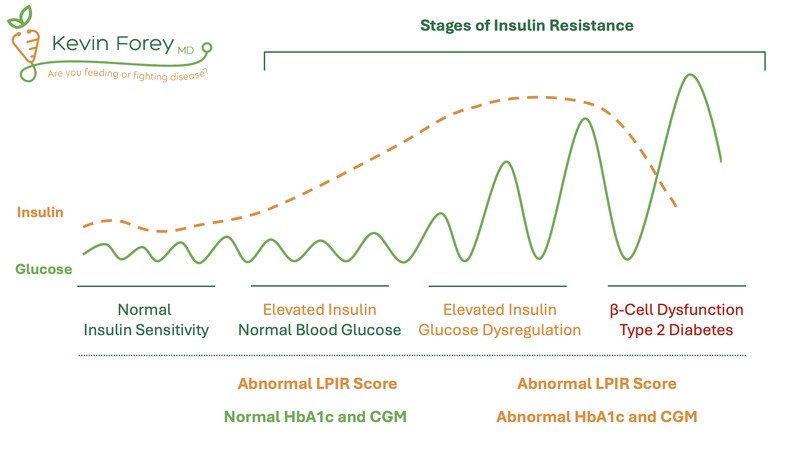
In my own tracking, I evaluate five domains that matter more than any single number on a scale. First, glycemic control: fasting glucose, HbA1c, insulin levels. This is the foundation. Elevated insulin is the first sign of metabolic dysfunction, often years before diabetes shows up on a standard test. I check mine every six months at a direct-to-consumer lab in Austin. Last year, my fasting glucose was 102. One point away from prediabetes. My BMI said I was fine. My blood said I was not. The nurse at the clinic smiled and said "keep doing what you are doing." I was eating delivery four times a week and sleeping six hours a night. What I was doing was broken. The BMI just could not see it.
Second, lipid profile: not just total cholesterol. LDL particle number, HDL function, triglycerides, and the triglyceride-to-HDL ratio. A TG/HDL ratio above 3 is strongly predictive of insulin resistance. Mine was 2.8. Borderline. My BMI never warned me about that. The standard lipid panel my doctor ordered showed total cholesterol within range. But the ratio told a different story. Third, blood pressure: hypertension is often the first clinically obvious sign of metabolic syndrome. But it is usually the last domino to fall. Mine was 118/76. Not terrible, but creeping up. At 32 years old, that is not where I want to be. Fourth, inflammatory markers: CRP, ferritin, uric acid. Chronic low-grade inflammation drives atherosclerosis, fatty liver, and neurodegeneration. My CRP was 1.2. Low, but not zero. And fifth, body composition: BMI, waist circumference, body fat percentage, muscle mass. Not just weight, but where weight is distributed and what tissues it is composed of.
A person can be "overweight" by BMI but metabolically healthy if all five domains are optimal. Conversely, a "normal" BMI person can be metabolically unhealthy if even one domain is compromised. I was that person. BMI 24.3, normal weight, but fasting glucose at 102, blood pressure creeping up, visceral fat in the 85th percentile. The chart said I was fine. My body was sending a very different memo. And I ignored it because the number was green. That is the danger of single-metric health assessment. It gives you permission to ignore everything else.
There is a phenomenon in cardiovascular research called the "obesity paradox" — overweight and mildly obese patients sometimes have better outcomes than normal-weight patients after cardiac events. The reasons are debated: maybe overweight patients have more metabolic reserve. Maybe they are diagnosed earlier because of more frequent medical contact. Maybe the normal-weight patients had undiagnosed sarcopenia. I do not think it is a paradox. I think it is evidence that weight is a crude proxy for health. The real story is in the metabolic data, not the scale. A 2022 study in the European Heart Journal found that patients with established heart failure and BMI 27-32 had better survival than those with BMI 20-25. That is not a paradox. That is biology being more complicated than a single number.
You do not need a 500-dollar metabolic panel to assess your health. Start with what you can measure at home. Fasting glucose is available at any pharmacy. Should be under 100 mg/dL. Blood pressure monitors are 30 dollars. Should be under 120/80. Waist circumference: a tape measure costs 2 dollars. Should be under 40 inches for men or 35 inches for women, or 35/31 for Asian populations. And how you feel: energy, sleep, mood, digestion. These are data too. They are subjective, but they are real. If you feel terrible, something is wrong, regardless of what the calculator says. I felt terrible for months while my BMI said I was normal. The calculator was not lying. It was just not asking the right questions.
The calculators on this site are starting points. They screen for risk. But metabolic health is a multidimensional concept that no single number — not BMI, not weight, not body fat percentage — can capture. I built these tools because I was frustrated by the reductionism of standard health assessments. BMI is one pixel in a much larger picture. Waist circumference adds another pixel. Blood pressure adds another. Bloodwork adds a dozen more. Only when you step back and look at the whole image do you see what is actually happening. And what is happening is usually more complicated than "you are fine" or "you are not fine."
My recommendation: if you are tracking your health, track at least three metrics. BMI or weight is fine as a baseline, but add waist circumference and one metabolic marker — fasting glucose or blood pressure. Track them monthly. Watch the trends, not the absolute numbers. A BMI of 26 with a waist of 32 inches and a fasting glucose of 90 is metabolically healthier than a BMI of 22 with a waist of 36 inches and a fasting glucose of 110. The numbers tell a story. Make sure you are reading the whole book, not just the cover. And if your doctor only looks at BMI, find a new doctor or bring your own data. I have done both.
I still check my BMI occasionally. It is a habit. But now I check it alongside my waist measurement, my blood pressure, and my latest lab results. The BMI number has not changed much in two years. But my metabolic health has improved dramatically. My fasting glucose is 89 now. My blood pressure is 112/74. My CRP is 0.8. My waist is 33 inches. The scale says I am the same. My body says I am different. I believe my body. And you should believe yours, even when the calculator disagrees.
What metrics are you tracking beyond the scale? And what are they telling you that BMI never could? If you are only looking at one number, you are missing the story. Health is a dashboard, not a single gauge. Build your dashboard. Track your trends. And trust the data that actually reflects what is happening inside your body, not just what fits on a chart from the 1830s.
Glycemic control (glucose, insulin, HbA1c), lipid profile (TG/HDL ratio matters most), blood pressure, inflammatory markers (CRP, uric acid), and body composition (waist, body fat, muscle mass). BMI captures none of these directly.
Yes — about 15-20% of people with BMI 25-30 are metabolically healthy by all five domains. Conversely, 30% of normal-BMI adults have metabolic syndrome. Weight alone is a terrible proxy for health.
Fasting glucose strips ($10), blood pressure monitor ($30), tape measure ($2). These three tools, used monthly, capture more useful information than BMI alone. Add a $150 lab panel annually for fasting insulin, lipids, and CRP.
