
Every week, someone asks me: "Should I get a DEXA scan?" Or "Is my smart scale accurate?" Or "What about those handheld body fat analyzers?" The answer is complicated. And "complicated" doesn't get clicks. But it is the only honest answer, so here we go.
Body fat percentage is more accurate than BMI. But it's also harder to measure accurately, more expensive, and not always more clinically useful. Here's the nuanced truth that fitness influencers won't tell you, because nuance doesn't sell supplements or $200 meal plans.
I learned this the hard way. Two years ago, I was obsessed with getting my body fat percentage measured. I went to a mobile DEXA clinic in Austin, paid $150, and got a result: 18.2% body fat. Solid. Then I stepped on my $80 smart scale that same morning: 22.4%. Three days later, I tried a handheld bioelectrical impedance device at the gym: 19.7%. Same body, three different numbers, spread across four percentage points. That is not precision. That is confusion with a price tag.
So let's talk about how we actually measure body fat, because the method matters more than the number.
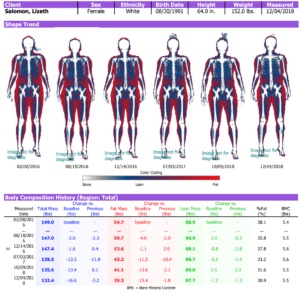
DEXA scan is the gold standard. Radiation exposure is minimal — less than a cross-country flight. Cost: $100-300. Not covered by insurance for routine screening. Requires specialized equipment and a trained technician. I got mine done at a mobile clinic that parks behind a CrossFit gym on South Lamar. The results are detailed: total body fat, regional breakdown (arms, legs, trunk), bone density, and lean mass. It's the most comprehensive picture you can get without joining a research study. The report even showed that my left leg had 0.3% more fat than my right, which I blame on years of driving a stick shift in Austin traffic.
Bod Pod uses air displacement plethysmography. Very accurate, comparable to DEXA. Cost: $50-100. Limited availability — there are maybe three in the entire Austin metro area. Requires fasting and specific clothing. I tried it once and felt like I was being sealed in a futuristic egg. The data was good. The experience was weird. The technician kept telling me to "relax and breathe normally" while I was sitting in a sealed chamber wearing a swim cap. I did not relax. I did breathe. The data was solid.
Underwater weighing is accurate but impractical. Most clinics don't have a dunk tank. I have never done it because I don't know anyone who has a dunk tank. If you do, please invite me over. I will bring beer and a towel.
Bioelectrical impedance — the method used by smart scales and handheld devices — is convenient but variable. Hydration status, meal timing, and skin temperature affect readings by 3-5%. Cost: $30-200. I own a smart scale. I use it daily. But I treat it as a trend tracker, not a precision instrument. If it says 20% one day and 19% the next, I don't celebrate. I wait for a two-week moving average. Because one data point is noise. Ten data points is a trend. And trends are what matter.
Skinfold calipers are cheap ($10-30) but highly operator-dependent. I bought a pair and tried measuring myself. I got a number. Then I had a trainer at Austin Simply Fit do it. The numbers were 6% apart. Six percent. On the same body, same day, same calipers. The difference was technique — how hard they pinched, where exactly they placed the calipers, whether they measured before or after my morning coffee. I threw the calipers in a drawer and haven't touched them since. Some tools are not worth the frustration.
So yes, body fat percentage is "more accurate." But only if you measure it accurately. And most people don't have access to the accurate methods. The DEXA clinic I use is booked three weeks out. The Bod Pod requires an appointment at UT's kinesiology department. The average person is using a $50 smart scale and treating it like gospel. That is not accuracy. That is convenience dressed up as science.
Here's what I've learned from tracking my own numbers for two years: for most people, BMI plus waist circumference gives you 90% of the clinically useful information. The remaining 10%? Nice to have, but rarely changes what you actually do. If your BMI is 28 and your waist is 38 inches, you don't need a DEXA scan to tell you that you should lose some weight. You need a plan. And the plan is the same whether your body fat is 25% or 28%.
The exceptions are real and important. Elite athletes need body fat percentage because BMI is useless for them. A powerlifter with BMI 31 and 12% body fat is not obese. He's strong. Sarcopenic obesity in elderly patients — normal BMI, high body fat, low muscle — is dangerous and BMI misses it completely. Post-bariatric surgery patients experience rapid muscle loss, so BMI can look "good" while body composition is poor. And anyone doing body recomposition — gaining muscle and losing fat simultaneously — needs body fat data because the scale doesn't move even when everything is changing.
I track my own body fat via DEXA every six months. In between, I use the Navy method (tape measurements) as a proxy. It's not perfect, but it's consistent. I measure my waist and neck on the same day of the week, at the same time, after the same routine. The absolute number might be off by a few points, but the trend is reliable. And the trend is what matters. A DEXA scan that shows 18% today and 16% in six months is useful. A smart scale that bounces between 20% and 22% daily is not.
The BMI + waist calculator on this site? It's not as sexy as a DEXA scan. But it's free, accessible, and clinically meaningful for 90% of people. That's why I built it. Because most people don't need a $300 scan to know they should eat more vegetables and walk more. They need a simple, honest number that points them in the right direction. They need a tool that works in their kitchen, not a clinic appointment three weeks from now.
My recommendation: if you're a regular person with a regular body and regular goals, start with BMI and waist circumference. Track it monthly. Watch the trend. If you're an athlete, elderly, post-surgical, or doing body recomposition, invest in a DEXA or Bod Pod every 6-12 months. Don't obsess over smart scale numbers. They're directionally useful but not precise. I've had days where my scale said 20% and I knew from the mirror and the tape that I was closer to 17%. The scale was wrong. My eyes were right. And the DEXA confirmed it.
Data is only useful if you understand its limitations. Body fat percentage is a better metric than BMI. But a bad measurement of body fat is worse than a good measurement of BMI. Choose your tools wisely. Understand what each method can and cannot do. And remember that the number on the screen is not your health. It's just a number. Your health is how you feel, how you move, how you sleep, and how your bloodwork looks. No single metric captures all of that. Not BMI. Not body fat percentage. Not anything.
What metrics do you actually trust? And more importantly, what are you doing with them?
For most people, no. DEXA costs $100-300 and is rarely covered by insurance. BMI plus waist circumference gives 90% of clinically useful information. Reserve DEXA for athletes, elderly patients, or those doing body recomposition.
Bioelectrical impedance is sensitive to hydration, meal timing, and skin temperature. Readings can vary 3-5% daily. Use a 14-day moving average instead of single readings for trend tracking.
DEXA is the gold standard. Bod Pod and underwater weighing are also highly accurate. Skinfold calipers and consumer bioimpedance devices are less precise but useful for tracking trends when used consistently.
