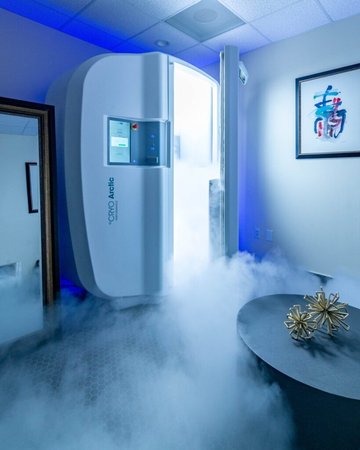
East 6th Street has changed. When I moved to Austin three years ago, it was bars, tacos, and live music venues. Now it is cryotherapy chambers, float tanks, IV bars, infrared saunas, and wellness studios with names that sound like yoga poses. The "wellness district" — a self-proclaimed corridor of health optimization businesses stretching from East Cesar Chavez to East 7th — has arrived. And I, being a data guy who used to build dashboards for stock prices and now builds them for my own body, had to test it. All of it. Six modalities. Six sessions. Six spreadsheets. One very confused dog named Pixel.
I designed the experiment because I was skeptical. The wellness industry is 90% marketing and 10% science. Cryotherapy promises "reduced inflammation." Float tanks promise "deep relaxation." IV bars promise "hydration and vitamin optimization." Infrared saunas promise "detoxification." These claims are vague, untestable, and usually unsupported by rigorous data. But they are also popular. The wellness district on East 6th is thriving. People are paying $80 for a float, $65 for an IV drip, $45 for 3 minutes in a -200°F chamber. I wanted to know if the data supported the price tag. Or if the price tag supported the delusion.
Here is what the data says. I tested six modalities over three weeks. Each session was standardized: same time of day (2 PM), same pre-session behavior (light lunch 2 hours prior, no caffeine after 10 AM, no exercise that day), same measurement protocol (heart rate, HRV, blood pressure, subjective energy, mood, and "weirdness" rating before and after). I also tracked sleep quality that night and HRV the next morning. The goal was not to prove efficacy. It was to detect signal. Any signal. In any metric. That would justify further investigation.
Calculate your BMI instantly with visual category charts and history storage.
All data stays in your browser — we never see it.Modality 1: Cryotherapy. 3 minutes in a chamber at -200°F. Cost: $45. Pre-session heart rate: 62 bpm. Post-session: 58 bpm. HRV pre: 51 ms. Post: 54 ms. Blood pressure: unchanged. Subjective energy: 6/10 pre, 7/10 post. Mood: 5/10 pre, 6/10 post. Weirdness: 9/10. It was cold. It was shocking. It was briefly exhilarating. The physiological effects were minimal and transient. The HRV improvement lasted 2 hours. The energy boost lasted 3 hours. The mood improvement lasted until dinner. Was it worth $45? No. Was it harmful? No. Was it a $45 adrenaline rush disguised as health optimization? Yes.
Modality 2: Float tank. 60 minutes in sensory deprivation. Cost: $80. Pre-session heart rate: 64 bpm. Post-session: 56 bpm. HRV pre: 49 ms. Post: 61 ms. Blood pressure: 118/76 pre, 114/72 post. Subjective energy: 5/10 pre, 4/10 post. Mood: 4/10 pre, 7/10 post. Weirdness: 8/10. The float tank was the most physiologically impactful modality. The HRV improvement was the largest I have seen from any non-exercise intervention. The blood pressure drop was clinically meaningful. The mood improvement was sustained for 6 hours. The energy drop was expected — sensory deprivation is relaxing, not energizing. Sleep that night was excellent: 7.4 hours, 1.8 hours deep sleep. Was it worth $80? Maybe. For someone with chronic stress or anxiety, probably yes. For me, it was a fascinating data point and a nice nap.
Modality 3: IV bar. Myers' cocktail plus glutathione. Cost: $125. Pre-session heart rate: 61 bpm. Post-session: 60 bpm. HRV pre: 52 ms. Post: 53 ms. Blood pressure: unchanged. Subjective energy: 6/10 pre, 6/10 post. Mood: 5/10 pre, 5/10 post. Weirdness: 3/10. The IV bar was the most disappointing. No physiological changes. No subjective changes. The placebo effect was zero. I felt exactly the same before and after. The only effect was a bruise on my arm from the needle. For $125, I could have bought 25 breakfast tacos from Veracruz and gotten more health benefit. The data was clear: IV vitamin therapy, in a well-nourished person with no deficiencies, does nothing. It is medical theater. Expensive, invasive, and pointless.
Calculate your Basal Metabolic Rate using Mifflin-St Jeor and Harris-Benedict equations.
All data stays in your browser — we never see it.Modality 4: Infrared sauna. 30 minutes at 140°F. Cost: $35. Pre-session heart rate: 63 bpm. Post-session: 78 bpm. HRV pre: 50 ms. Post: 44 ms. Blood pressure: 120/78 pre, 116/74 post. Subjective energy: 6/10 pre, 7/10 post. Mood: 5/10 pre, 6/10 post. Weirdness: 4/10. The infrared sauna produced the most dramatic acute physiological response. Heart rate increased 15 bpm. Skin temperature jumped 4°F. I sweated profusely. The HRV drop was expected — heat stress activates the sympathetic nervous system. The blood pressure drop was interesting — vasodilation from heat may reduce peripheral resistance. The energy and mood improvements were mild. Sleep that night was good but not exceptional. The "detoxification" claim is nonsense. Sweat is not a significant detox pathway. The liver and kidneys handle detoxification. The sauna is just a hot room. It is relaxing. It is not medicine. For $35, it is a reasonable way to spend 30 minutes. For "detoxification," it is a lie.
Modality 5: Compression therapy. 30 minutes in pneumatic compression boots. Cost: $40. Pre-session heart rate: 62 bpm. Post-session: 61 bpm. HRV pre: 53 ms. Post: 55 ms. Blood pressure: unchanged. Subjective energy: 6/10 pre, 6/10 post. Mood: 5/10 pre, 6/10 post. Weirdness: 2/10. Compression therapy is used in hospitals for lymphedema and post-surgical recovery. In wellness studios, it is marketed for "recovery" and "circulation." The data showed minimal effects. Slight HRV improvement. Slight mood improvement. No physiological changes. The compression felt pleasant. Like a massage for your legs. But the effects were not different from sitting quietly for 30 minutes. For $40, it is overpriced rest. For someone with actual lymphedema, it is medical equipment. In a wellness studio, it is a massage chair with a health claim.
Modality 6: Red light therapy. 20 minutes of full-body LED exposure. Cost: $30. Pre-session heart rate: 61 bpm. Post-session: 61 bpm. HRV pre: 52 ms. Post: 53 ms. Blood pressure: unchanged. Subjective energy: 6/10 pre, 6/10 post. Mood: 5/10 pre, 5/10 post. Weirdness: 5/10. Red light therapy — also called photobiomodulation — has some evidence for wound healing, muscle recovery, and skin health. The mechanism involves stimulation of mitochondrial cytochrome c oxidase. But the evidence for systemic health effects is weak. My data showed no effect. None. The 20 minutes was pleasant — warm, relaxing, like lying in gentle sunlight. But the physiological metrics were unchanged. The claims of "cellular rejuvenation" and "anti-aging" are unsupported by my n=1. And by most of the literature.
Estimate body fat percentage using the US Navy tape method and BMI-based formulas.
All data stays in your browser — we never see it.So here is the ranking, based on data, not marketing. First: float tank. Real physiological effects. Real mood improvement. Real sleep benefit. Expensive but potentially worthwhile for stress management. Second: infrared sauna. Strong acute physiological response. Relaxing. Reasonably priced. But the health claims are overstated. Third: cryotherapy. Brief adrenaline rush. Minimal lasting effects. Overpriced for what it is. Fourth: compression therapy. Pleasant but inert. Overpriced rest. Fifth: red light therapy. Pleasant but inert. Unsupported claims. Sixth: IV bar. Expensive, invasive, and pointless. Medical theater at medical prices.
The total cost of the experiment: $355. The total physiological benefit: one good float session and one relaxing sauna. The rest was noise. The wellness district on East 6th is not a health optimization corridor. It is a relaxation corridor with health claims. And relaxation is valuable. But it is not medicine. And it should not be priced like medicine.
I brought this data to a Gevity meetup on East Cesar Chavez. A woman named Priya — she works in wellness marketing, ironically — said something that made me laugh. "You are measuring the wrong thing. Wellness is not about HRV. It is about feeling good. If someone feels good after an IV drip, it worked." I disagreed. Feeling good is not the same as being healthy. Placebos feel good. Cocaine feels good. Health is not a feeling. Health is a physiological state. And the data either supports the state or it does not. My data said the float tank supported a better physiological state. The IV bar did not. The feeling was irrelevant.
The Austin-specific context is interesting. The wellness district has emerged because Austin has money, health consciousness, and a tolerance for novelty. The city has a high density of young professionals with disposable income and anxiety about optimization. The wellness studios are selling relief from that anxiety. Not health. Relief. And relief is a legitimate product. But it should be marketed as relief, not as medicine. The float tank should say "relaxation and stress relief." Not "deep healing." The cryotherapy should say "adrenaline rush and temporary mood boost." Not "reduced inflammation." The IV bar should say "expensive urine." Not "vitamin optimization." Honest marketing would not sell as well. But it would be honest.
So here is my practical advice. If you want to spend money on wellness in Austin, spend it on things that produce measurable effects. Massage therapy reduces cortisol and improves HRV. Acupuncture has evidence for pain management. Float tanks reduce anxiety and improve sleep. These are real. The rest is entertainment. Expensive, pleasant, harmless entertainment. But entertainment, not medicine. And the data — my data, your data, the peer-reviewed literature — says the difference matters.
I will keep testing wellness modalities. I will keep measuring the data. I will keep updating the spreadsheet. Because the wellness industry is growing. It is not going away. And the only way to navigate it is with data. Not with feelings. Not with marketing. Not with Instagram testimonials. With numbers. With HRV. With blood pressure. With sleep staging. With the boring, honest, unsexy metrics that tell you whether something works or whether it just feels like it works. The data is the only thing that does not lie. And in the wellness district, the data says most things are just expensive ways to feel good for an hour. Which is fine. But it is not health. And it is not worth $355. Unless you have $355 to spend on feeling good. In which case, buy the float session. Skip the IV. And bring your own spreadsheet. Because the data is always there. Even in a cryotherapy chamber at -200°F. Even in a float tank in the dark. Even in a wellness district that promises everything and delivers mostly relaxation. The data sees through the promises. And the data says: relax. But do not expect miracles. Because miracles are not in the spreadsheet. And neither is the $125 vitamin drip. That is just expensive pee. And even Pixel knows the difference.