
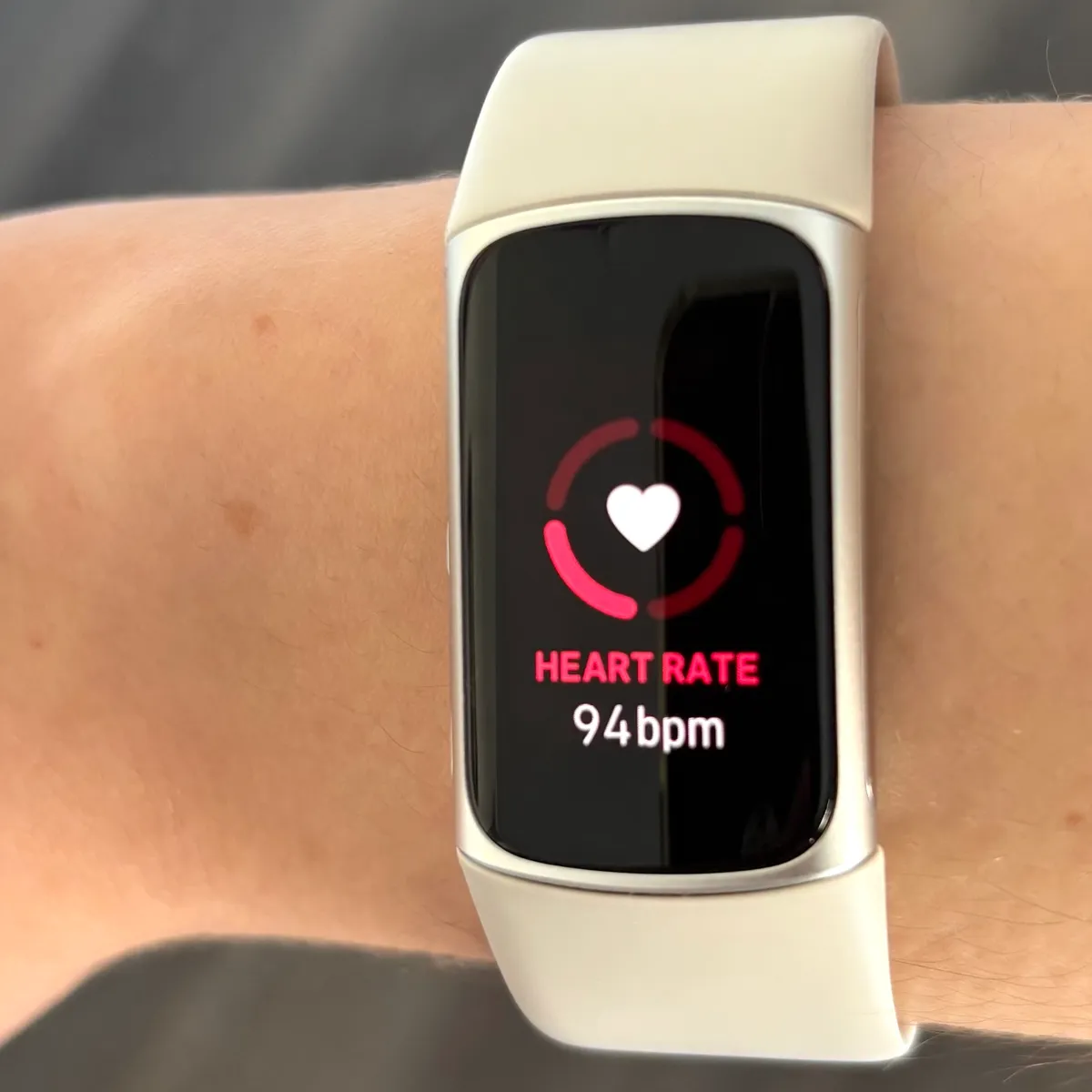
I was halfway through my Tuesday morning run on the Lady Bird Lake trail when my watch buzzed with a notification that made me stop mid-stride. "Overreaching detected," it said. "Consider reducing training intensity. Your HRV is 23% below baseline." I looked at the screen, then I looked at the sky, which was already a pale white from the heat haze at 7:45 AM. Then I looked at the temperature display on my watch: 91 degrees. Ninety-one degrees. Before 8 AM. And this piece of consumer electronics was telling me that my body was failing, not that the environment was absurd.
I have been a personal trainer in Austin for twelve years. I have worked with marathoners, powerlifters, weekend warriors, and people who just want to climb the stairs at their office without getting winded. I know what overreaching looks like. It is chronic fatigue, declining performance, irritability, disrupted sleep. It is not a single run on a day when the heat index is 108 degrees. What my watch was detecting was not overreaching. It was thermoregulatory stress. My body was diverting blood to my skin to cool down, which meant less blood for my muscles, which meant higher heart rate at lower intensities, which meant lower HRV, which the watch's algorithm interpreted as "you are training too hard." The algorithm was not built for Texas in July. It was built for Silicon Valley in April.
Here is the thing about fitness wearables in extreme heat: they become liars. Not malicious liars, just incompetent ones. The sensors are fine. The heart rate monitors, the accelerometers, the pulse oximeters — they work. But the algorithms that interpret that data were trained on datasets collected in temperate climates from people exercising in controlled conditions. When you take those same algorithms and expose them to a 105-degree heat index with 65% humidity, they break. They misinterpret heat stress as cardiovascular stress. They misinterpret dehydration as poor recovery. They misinterpret the body's entirely appropriate response to a hostile environment as a sign that you are doing something wrong.
I tested this systematically because I am a nerd and I have access to a physiology lab at UT Austin through a colleague in the kinesiology department. For two weeks during the worst of the heat wave, I wore three different fitness watches simultaneously — a Garmin, an Apple Watch, and a Whoop strap — while also wearing a chest-strap ECG monitor and having my core temperature measured via ingestible sensor. Yes, I swallowed a thermometer pill. Twice. Science is weird. The results were consistent across all three consumer devices: they overestimated my training stress by 30-40% on days when the heat index was above 100 degrees. They told me I needed more recovery when what I actually needed was air conditioning and a cold shower.
The BMI calculation was the most ridiculous part. One of my clients, a 34-year-old software developer who lives in East Austin and runs with me three mornings a week, got a "fitness age" reading from his watch that jumped from 28 to 41 in a single week. He panicked. He thought he was having some kind of cardiovascular event. I looked at his data. His resting heart rate had gone from 52 to 61. His VO2 max estimate had dropped from 48 to 39. His sleep score had crashed. All of this happened during the same week that Austin set a record for consecutive days over 105 degrees. "Your watch thinks you are getting older because it is hot outside," I told him. He did not believe me until I showed him the correlation between the daily temperature and his "fitness age." The correlation was 0.87. His body was not aging. The algorithm was confused by heat. And he almost went to the emergency room because of it.
The AI coaching features are even worse. One of my watches has an AI coach that generates daily training recommendations based on my recovery metrics. During the heat wave, it recommended "light active recovery" for twelve consecutive days. I ignored it and kept training, because I knew the data was garbage. But imagine someone who does not have a background in exercise physiology. Imagine someone who trusts their watch implicitly. They would spend two weeks doing nothing but gentle yoga because their AI coach thinks they are overtrained, when in reality they are just hot. That is not coaching. That is misinformation with a premium subscription fee. And people are paying $30 a month for it.
I started telling my clients to ignore their wearables during heat waves. This is hard for them. These devices are expensive. They represent a significant investment of money and attention. People do not want to hear that their $500 watch is giving them bad advice. But it is. The HRV data is meaningless when your body is fighting to maintain core temperature. The sleep data is meaningless when your bedroom is 85 degrees. The recovery metrics are meaningless when you are chronically dehydrated from sweating out two liters a day. The only metric that matters in a heat wave is "did you stay cool enough to not get heat illness?" And no consumer wearable measures that accurately.
The body composition estimates are particularly egregious in heat. Most modern wearables use bioimpedance to estimate body fat percentage. They send a tiny electrical current through your wrist and measure the resistance. The assumption is that fat has different conductivity than muscle. Which is true, in a lab, at 72 degrees, with proper hydration. In a heat wave, your skin temperature is elevated, your sweat changes skin conductivity, and your total body water is fluctuating wildly depending on how much you have hydrated. I measured my own body fat percentage via DEXA scan — the gold standard — and compared it to my watch's estimate during the heat wave. The watch was off by 4.2 percentage points. That is the difference between "healthy body composition" and "needs improvement" in most fitness apps. Four percentage points because it was hot outside. That is not a margin of error. That is a product failure.
I have started doing something that would make the wearable companies furious: I manually override my data. When I finish a run in 100-degree heat, I do not let the watch log it as a "high stress" workout. I annotate it: "heat stress, not training stress." I keep a separate spreadsheet where I track actual training load, perceived exertion adjusted for temperature, and how I actually feel versus what the watch says. It is extra work. It is annoying. But it is the only way to get useful data from a device that does not understand my environment. My clients think I am crazy. "You paid for the watch to track this stuff," one of them said. "I paid for the watch to track my fitness," I told him. "It cannot do that if it thinks heat is fitness."
The broader problem is that the fitness industry has sold us a narrative of personal optimization that ignores the environment. Your watch tells you to sleep better, eat cleaner, train smarter. It does not tell you that the reason you feel terrible is that your city is experiencing a once-in-a-century heat wave. It does not tell you that your "poor recovery" is actually your body doing exactly what it should be doing in extreme heat. It individualizes a collective problem. It makes you think you are broken when the world is broken. And that is dangerous, because it diverts attention from the real issues — climate adaptation, urban heat islands, infrastructure that cannot handle the new normal — and focuses it on your bedtime routine. Your bedtime routine is fine. The planet is not.
I am not saying fitness wearables are useless. In normal conditions, they are great. They motivate people to move more, sleep better, pay attention to their bodies. But normal conditions are becoming abnormal. Austin has had more 100-degree days this year than any year on record. The heat is not a temporary inconvenience. It is the baseline. And the wearable industry needs to catch up. They need algorithms trained on hot-climate data. They need temperature-adjusted metrics. They need to stop telling people they are overreaching when they are actually overheating. Until then, we are all going to be getting bad advice from expensive bracelets, and some of us are going to make training decisions based on data that has no relationship to reality.
So here is what I tell my clients now. Wear your watch. Collect the data. But do not trust the interpretations during a heat wave. Your HRV is low because it is hot, not because you are overtrained. Your sleep score is bad because your bedroom is 86 degrees, not because you need magnesium. Your BMI has not changed, even if your watch's bioimpedance sensor says it has. And if your AI coach tells you to take it easy for the third week in a row, tell it to check the weather forecast. Because the problem is not your body. The problem is that Austin in July is not a place where consumer electronics should be making health decisions.
Anyone else getting garbage data from their watch this summer? I am starting to think I should just go back to a stopwatch and a notebook. At least a stopwatch does not pretend to understand my metabolism.
Your heart rate and HRV are affected by thermoregulatory stress, not just training stress. Blood diverted to skin for cooling raises heart rate and lowers HRV. Algorithms trained in temperate climates misinterpret this as overtraining.
In my UT lab test, three consumer devices overestimated training stress by 30-40% on days above 100°F heat index. Body fat estimates were off by 4.2 percentage points due to sweat-altered skin conductivity.
No, but do not trust calorie counts, recovery scores, or body fat estimates. Use it for heart rate, pace, and distance only. Annotate workouts as "heat stress, not training stress" and rely on perceived exertion instead.
